
Bricklayers in Holland-on-Sea.
Time-served bricklayers in Holland-on-Sea covering CO15 — your local bricklayer in Holland-on-Sea for garden walls, repointing, structural brick repairs, piers, chimneys and new openings across Frinton-on-Sea, Kirby Cross, Great Holland and the surrounding villages. Brickwork from £140 — fully insured, family-run, 4.9★ across 305+ reviews.
- Local bricklayers covering CO15
- £5m public liability
- Free no-obligation quote
- Written workmanship guarantee
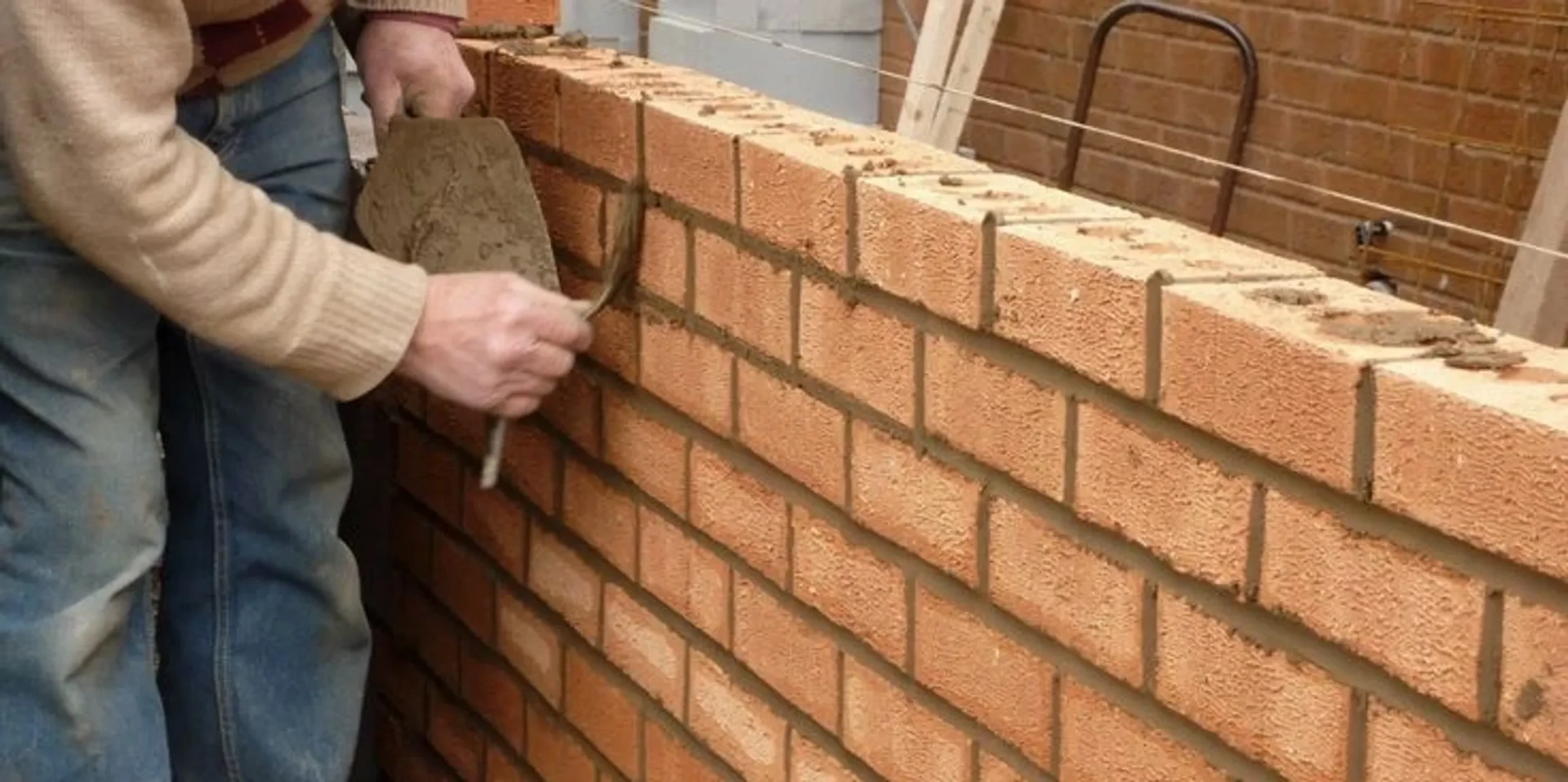
Brickwork services in Holland-on-Sea
- Garden walls, boundary walls & piers
- Repointing — lime and sand/cement mortar
- Structural brick repairs & crack stitching
- New door and window openings with steels
- Chimney rebuilds, repointing & repairs
- Brick and block extensions from footings up
- Retaining walls, planters & brick steps
- Brick matching for period and listed property
How a Holland-on-Sea brickwork job runs
- Step 1
Free site visit
We measure up, check ground conditions and match your existing brick and mortar.
- Step 2
Written fixed quote
Itemised — footings, bricks, mortar, coping and labour. No day rates.
- Step 3
Footings & DPC
Dug to depth, concrete poured, damp-proof course set correctly at the right level.
- Step 4
Laying & pointing
Courses laid to line and level, joints struck or weather-pointed to match the property.
- Step 5
Copings & clean down
Copings bedded, site cleared, brickwork cleaned down and a written guarantee issued.
Brick types we lay and match in Holland-on-Sea
Getting the brick right matters more than anything else on a job — the wrong facing brick on a Holland-on-Sea extension or garden wall stands out for years. We take a sample from your existing wall, match it at the local yards and show you the options before a single course goes down.
London stocks
Yellow-brown multi stocks with a soft, weathered face — the classic look on Victorian and Georgian property across Essex. We use reclaimed stocks for repairs and new-build stocks for extensions.
Suffolk & Cambridgeshire whites
Pale cream-white gault bricks found all over north Essex and the Suffolk border. Soft and easily damaged, so joints get raked by hand and pointed in a lime mortar.
Red multi & red rustic
The standard facing brick on most post-war and modern estate housing. Blends of red, plum and brown so repairs disappear into the elevation.
Handmade & reclaimed
Sand-faced handmade bricks and genuine reclaimed imperial-size bricks (73mm) for period walls, chimneys and listed property where a modern metric brick would never match.
Engineering brick (Class A & B)
Dense, frost- and water-resistant. Used below DPC, on retaining walls, manholes and the bottom courses of garden walls where ground water is a problem.
Facing blocks & concrete common
Used behind render or where the wall won't be seen — cheaper per square metre, quick to lay, and just as strong when built off the right footing.
Specials & cut bricks
Bullnose, plinth, cant, squint and radial specials for piers, steps, curved walls and window reveals — cut and bonded rather than bodged on site.
Glazed & feature brick
Glazed headers, soldier courses and contrasting banding for modern extensions and front boundary walls where you want a design feature.
Mortar colour, mix and joint finish
Mortar makes up around 17% of a brick wall's face, so the colour and the joint profile change the whole look. We mix on site to a set gauge so every batch is identical — no banding or patchy colour halfway up a wall.
Colour matching
Mortar colour comes from the sand, not just the cement. We use local soft sands, silver sand or a coloured additive and build a sample panel so you can see it dry before we commit — wet mortar always looks two shades darker.
Sand & cement (modern brick)
Typically a 4:1 or 5:1 mix with plasticiser for facing brickwork above DPC, and a stronger 3:1 below ground and on retaining walls.
Lime mortar (period & listed)
NHL 3.5 or hot-mixed lime putty on solid-wall properties. It lets damp escape through the joint instead of through the brick face — cement pointing on a soft old brick is what causes spalling.
Joint profiles
Weather-struck, bucket handle, flush, recessed or tuck pointing. The profile is matched to the original so a repair reads as part of the wall, not a patch.
Repointing done properly in Holland-on-Sea
Repointing isn't smearing new mortar over old. Joints are raked out to at least twice their width (20–25mm), brushed and damped down, then filled in layers and struck to the right profile. Angle grinders are only used where the brick arris allows it — on soft Suffolk whites and handmades we rake by hand to avoid chipping the faces.
- Weather-struck joint — sheds water, standard on Essex housing stock
- Bucket handle (half-round) — hard-wearing, common on 1930s–1980s homes
- Flush joint — used on reclaimed and rustic brick
- Recessed joint — modern, sharp, only on frost-resistant brick
- Lime mortar repointing on period and listed property so walls stay breathable
- Full colour-matched sample panel built before we start the main elevation
Brick bonds — the pattern your wall is laid in
The bond decides both the strength and the character of the wall. A one-brick garden wall in Holland-on-Sea laid in English garden wall bond will outlast a half-brick stretcher wall by decades, and on period properties matching the original bond is the difference between a repair you notice and one you don't.
Stretcher bond
Every brick laid lengthways with a half-brick overlap. Standard for modern cavity walls and half-brick (102mm) garden walls.
English bond
Alternate courses of headers and stretchers. The strongest of the traditional bonds — used on one-brick retaining and boundary walls.
Flemish bond
Headers and stretchers alternating within every course. The most decorative bond and the one found on most Georgian and Victorian frontages in Essex.
English garden wall bond
Three or five stretcher courses to one header course. Our usual recommendation for a one-brick garden wall — strong, economical and traditional.
Flemish garden wall bond
Three stretchers to one header in each course. A softer decorative option for a front boundary wall.
Header, stack & soldier courses
Header bond for curves, stacked bond for contemporary feature panels, and soldier courses over openings and as a band beneath a coping.
Copings, pier caps & tile creasing
Most garden walls fail from the top down — water soaks into an unprotected top course, freezes and blows the faces off. Every new wall we build in Holland-on-Sea gets a proper weathered top, and we'll always recommend pier caps and either a coping or a tile creasing course rather than a flush brick-on-edge finish.
Tile creasing
Two courses of clay plain tiles bedded on the top of the wall projecting 25–40mm each side, with a brick-on-edge course over. It throws rainwater clear of the face and is the traditional Essex garden-wall detail — we'd always recommend it on a brick wall in a period setting.
Pier caps
Every pier gets a cap — concrete, natural stone, or a saddleback / weathered clay cap. Piers are the most exposed part of the wall and an uncapped pier will frost-damage within a few winters.
Coping stones
Once-weathered, twice-weathered or saddleback copings in concrete, cast stone, natural sandstone or Yorkstone, bedded on a full mortar bed with a drip throat underneath and joints pointed up.
Brick-on-edge
A simple bricks-on-edge top course, best used with a creasing course or a DPC beneath it. Cheapest option, but on its own it lets water straight into the wall.
Hidden DPC & weep detail
A concealed damp-proof course under the coping or creasing stops water tracking down inside the wall and blowing brick faces off in a frost.
Movement joints & reinforcement
Vertical movement joints at the correct centres and bed-joint reinforcement or piers at spacing so a long wall doesn't crack as it moves.
Rendered blockwork in Holland-on-Sea
Not every wall needs to be faced in brick. Rendered blockwork is quicker and cheaper for boundary walls, retaining walls and extension flanks, and it gives you a clean modern finish that can be coloured to match the house. We lay dense concrete blocks off a proper concrete footing with a DPC, build in movement joints and pier reinforcement, then render in coats.
- Scratch coat and top coat sand/cement render, bell-cast bead at the base
- Through-coloured silicone or monocouche render — no repainting
- K-Rend and similar thin-coat systems on new build and extensions
- Painted smooth render in white, grey or a colour to match the property
- Brick plinth with render above — a common Essex boundary-wall detail
- Coping or pier caps on top so water never sits on the render
Bricklayer in Holland-on-Sea & across CO15
- Holland-on-Sea
- Frinton-on-Sea
- Kirby Cross
- Great Holland
Outside Holland-on-Sea? See our full brickwork service →
Bricklayers in other towns we cover
- Bricklayers Colchester
- Bricklayers Chelmsford
- Bricklayers Ipswich
- Bricklayers Braintree
- Bricklayers Clacton-on-Sea
- Bricklayers Witham
- Bricklayers Maldon
- Bricklayers Halstead
- Bricklayers Sudbury
- Bricklayers Harwich
- Bricklayers Tiptree
- Bricklayers West Mersea
- Bricklayers Manningtree
- Bricklayers Kelvedon
- Bricklayers Coggeshall
- Bricklayers Earls Colne
- Bricklayers South Woodham Ferrers
- Bricklayers Southend-on-Sea
- Bricklayers Leigh-on-Sea
- Bricklayers Westcliff-on-Sea
- Bricklayers Hatfield Peverel
- Bricklayers Danbury
- Bricklayers Brentwood
- Bricklayers Great Dunmow
- Bricklayers Haverhill
- Bricklayers Hadleigh
- Bricklayers Dedham
- Bricklayers Billericay
- Bricklayers Wickford
- Bricklayers Mayland
Bricklayers Holland-on-Sea — your questions answered
How much does a bricklayer in Holland-on-Sea cost?+
Small brickwork jobs in Holland-on-Sea start from £140. A typical garden wall runs roughly £120–£180 per square metre supplied and built, and repointing usually falls between £45 and £90 per square metre depending on access and mortar type. Every job gets a written fixed price.
Do you do repointing in Holland-on-Sea?+
Yes — we repoint houses, garden walls and chimneys across Holland-on-Sea and CO15. Period and listed properties get a lime mortar mix matched to the original; modern homes get a colour-matched sand and cement.
How long does a garden wall take to build in Holland-on-Sea?+
A standard 10–15 metre garden wall in Holland-on-Sea usually takes 3–6 working days including footings and copings, weather permitting. We'll confirm a programme in your quote.
Can you match the bricks on my property?+
Almost always. We source reclaimed and specials from local yards to match Holland-on-Sea stock — Suffolk whites, London stocks, red multis and handmade bricks for period work.
Are you insured and guaranteed?+
Yes — £5m public liability on every job, full RAMS, and a written workmanship guarantee. We're rated 4.9★ across 305+ reviews from homeowners in Colchester, Essex and the surrounding area.
Can you match my existing mortar colour?+
Yes. Mortar colour comes mostly from the sand, so we mix samples using local soft sand, silver sand and colour additives, build a small sample panel on your wall in Holland-on-Sea and let it dry before agreeing the mix — wet mortar always looks darker than the finished joint.
Should a new garden wall have pier caps or tile creasing?+
Both, ideally. Piers should always be capped, and the wall top wants either a weathered coping or a double course of tile creasing with a brick-on-edge over it. An open brick top lets water soak in and frost will blow the brick faces off within a few winters.
What brick bond will you use for my wall?+
For a one-brick garden wall in Holland-on-Sea we normally use English garden wall bond — strong and traditional. Modern half-brick walls are stretcher bond, Georgian and Victorian frontages are usually Flemish, and on repairs we always match the original bond.
Can you build a rendered block wall instead of brick?+
Yes. Dense concrete blockwork off a proper footing, rendered in a scratch and top coat, or a through-coloured silicone/monocouche render so it never needs painting. It's quicker and cheaper than facing brick and still gets a coping or pier caps on top.
What areas around Holland-on-Sea do you cover?+
CO15 — Holland-on-Sea, Frinton-on-Sea, Kirby Cross, Great Holland and the surrounding villages.
Free brickwork quote in Holland-on-Sea
Same-day call back across CO15.